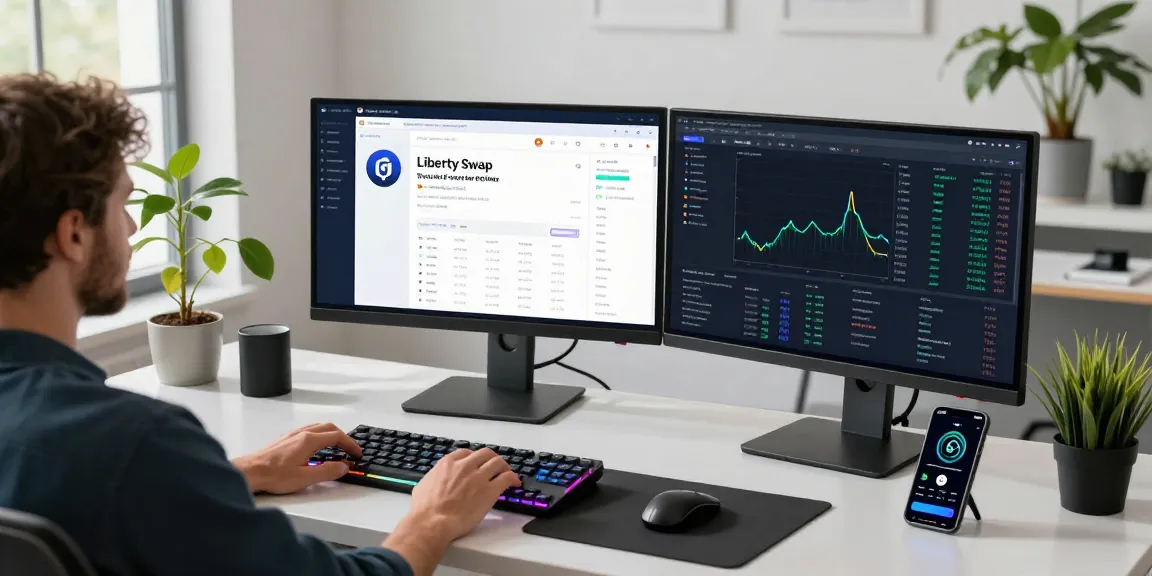
Understanding LibertySwap: A Revolutionary Cross-Chain Exchange
In the rapidly evolving world of decentralized finance (DeFi), cross-chain exchanges like LibertySwap are redefining how users interact with multiple blockchain networks. As digital assets proliferate across various platforms, the need for seamless, efficient, and private asset transfer solutions has never been more critical. LibertySwap stands out as a non-custodial cross-chain decentralized exchange, offering fast and cost-effective swaps of USDC and other digital assets while ensuring user privacy and control over their funds. This article delves into the workings of LibertySwap and explores its key features, technology, and user-friendly interface, positioning it as a vital player in the DeFi ecosystem. If you're looking for a comprehensive resource on LibertySwap, libertyswap provides valuable insights into utilizing this platform to meet your trading needs.
What Is LibertySwap?
LibertySwap is a decentralized finance protocol that enables users to swap digital assets between different blockchain networks without the need for centralized intermediaries. Unlike traditional cryptocurrency exchanges, which often require the submission of personal information and hold user funds in centralized wallets, LibertySwap operates on a fully non-custodial model. This means users maintain complete control over their private keys and assets throughout the entire transaction process, fostering a culture of security and transparency.
Designed specifically to address the critical challenges faced in the cross-chain trading space, LibertySwap offers a solution to high transaction fees, slow processing times, and inadequate transaction privacy that are common among legacy bridges. By leveraging advanced technology and innovative mechanisms, LibertySwap ensures a seamless trading experience for users across various blockchain platforms.
Key Features of LibertySwap
- Non-Custodial Architecture: Users retain control of their funds, eliminating counterparty risk.
- Fast Processing: Transactions are completed within 2 to 5 minutes under normal network conditions.
- Flat Fee Structure: A standardized fee of 0.3% on all swaps provides predictability.
- Privacy-First Approach: Proprietary cryptographic techniques ensure transaction confidentiality.
- Supported Assets: Primarily focusing on stable currencies like USDC, LibertySwap also supports other popular tokens.
Privacy and Security Aspects
In today's digital landscape, privacy is paramount. LibertySwap employs a combination of advanced cryptographic techniques to safeguard user transactions. This privacy layer operates by breaking the on-chain link between deposits on the source chain and withdrawals on the destination chain. While individual transactions remain visible on their respective blockchains, the correlation between them is effectively obscured, ensuring user confidentiality when trading across multiple networks.
How LibertySwap Works: The Technology Behind the Platform
Intent-Based Trading Architecture
One of the most innovative aspects of LibertySwap is its intent-based trading architecture. This design allows users to express their desires—such as "swap 1,000 USDC from Ethereum to USDC on PulseChain"—without needing to understand the intricacies of smart contracts and cross-chain communication. The platform interprets these intents and evaluates liquidities, calculating the most efficient path for execution. This not only simplifies the user experience but also minimizes transaction failures and slippage.
Cross-Chain Swap Mechanism Explained
The mechanics behind LibertySwap’s cross-chain swaps are both sophisticated and user-friendly. Upon initiating a swap, the user’s tokens are locked into a smart contract on the origin chain, and a decentralized network of relayers confirms this lock, transmitting a cryptographic proof to the destination chain. A smart contract on the destination chain then verifies this proof and releases the equivalent tokens to the user’s specified wallet address, all without the need for wrapped tokens. This method eliminates risks such as depegging and liquidity fragmentation commonly observed in traditional bridging solutions.
Supported Blockchains and Assets
LibertySwap is designed to support a growing number of major blockchain networks, which include Ethereum, Base, Arbitrum, and PulseChain. Each selected for its relevance and demand within the DeFi ecosystem, the supported blockchains allow users to tap into a vast array of decentralized applications and liquidity pools. The primary asset for trading on LibertySwap is USDC, a stablecoin that offers price stability, crucial for users looking to transfer value without encountering significant volatility.
Using LibertySwap: A Step-by-Step Guide
Setting Up Your Wallet
Before using LibertySwap, users must set up a compatible cryptocurrency wallet. MetaMask is the most widely used choice, supporting Ethereum, Base, Arbitrum, and can be configured for PulseChain. Users should ensure their wallets are correctly set up for each blockchain they intend to use, along with having enough native tokens to cover gas fees.
Executing a Swap: A Walkthrough
To execute a swap on LibertySwap, users first need to ensure they have the desired tokens available in their wallet. For instance, a user looking to bridge USDC from Ethereum to PulseChain needs to have USDC and sufficient ETH for gas fees.
The user-friendly LibertySwap interface allows for a straightforward selection process, where they choose the source chain and token, destination chain and token, and enter the swap amount. The interface provides an estimated amount to be received after the 0.3% fee, the processing time, and the gas fee on the source chain, enabling users to make informed decisions.
Common Issues and Troubleshooting
Even though LibertySwap is designed for ease of use, users may encounter occasional issues, such as transaction delays or insufficient funds for gas fees. In such cases, checking network status, ensuring wallet configurations are correct, and verifying sufficient balances for transaction fees can often resolve issues easily.
LibertySwap vs Traditional Cross-Chain Solutions
Transaction Speed and Cost Comparison
When comparing LibertySwap to traditional cross-chain solutions, the advantages are clear. While many existing bridges can take anywhere from 15 to 60 minutes for a transaction to complete, LibertySwap manages to finalize swaps in a mere 2 to 5 minutes. Additionally, its flat 0.3% fee structure is typically more competitive than the 1 to 3% fees charged by many traditional platforms, making it a more cost-effective solution for users.
User Experience Differences
User experience is a critical factor in the success of any trading platform. LibertySwap’s intent-based architecture significantly simplifies the process compared to traditional bridges. Users do not need to navigate through complex interfaces or understand the underlying technology—LibertySwap abstracts the complexities away, offering a single-step process that is intuitive and user-friendly.
Sector Feedback and User Trust
Feedback from users across the DeFi landscape indicates a growing trust in LibertySwap due to its emphasis on privacy, security, and operational efficiency. As more users prioritize their financial privacy and seek decentralized solutions that are easy to use, LibertySwap’s model resonates well with the core values of the cryptocurrency community.
Future Developments and Community Engagement
Upcoming Features and Integrations
The LibertySwap team is committed to expanding the platform's capabilities through ongoing development. Planned integrations with networks such as Polygon, BNB Smart Chain, and Solana aim to broaden access to even more DeFi ecosystems, driven by user feedback and market demand. Additionally, upcoming features may include enhanced privacy protections and improved liquidity management strategies.
LibertySwap's Roadmap for 2026
The roadmap for LibertySwap in 2026 focuses on strengthening the core values of privacy, speed, and low costs, while exploring new avenues for growth. The development team is keen on enhancing the protocol's capabilities and ensuring that it remains competitive in the evolving landscape of decentralized finance.
How to Get Involved with the Community
Active engagement with the LibertySwap community is encouraged. Users can join discussions on platforms like Telegram and Twitter, where they can interact with the development team, provide feedback, and stay updated on platform developments. This community-driven approach ensures that LibertySwap evolves in alignment with the needs and desires of its users.
Frequently Asked Questions
How long do LibertySwap transactions take?
LibertySwap transactions typically take between 2 to 5 minutes to process under normal network conditions, making it one of the fastest cross-chain solutions available in DeFi.
What fees does LibertySwap charge?
The platform charges a flat fee of 0.3% on all cross-chain swaps, with no hidden fees or variable pricing tiers. Users only need to cover the standard network gas costs on the source chain.
Is LibertySwap safe to use?
Yes, LibertySwap prioritizes user security through audited smart contracts and a decentralized architecture that eliminates single points of failure. Users retain control of their private keys throughout the entire process, further enhancing security.
Which blockchains does LibertySwap support?
LibertySwap currently supports Ethereum, Base, Arbitrum, and PulseChain. Future plans for integration with additional blockchains are underway to expand the platform's reach and capability.
Does LibertySwap require KYC verification?
No, LibertySwap operates on a fully non-custodial and permissionless model, meaning users can trade without undergoing Know Your Customer verification, preserving their privacy and freedom.